Kid Chore Routines Made Easy: Checklists, Timers, Fun
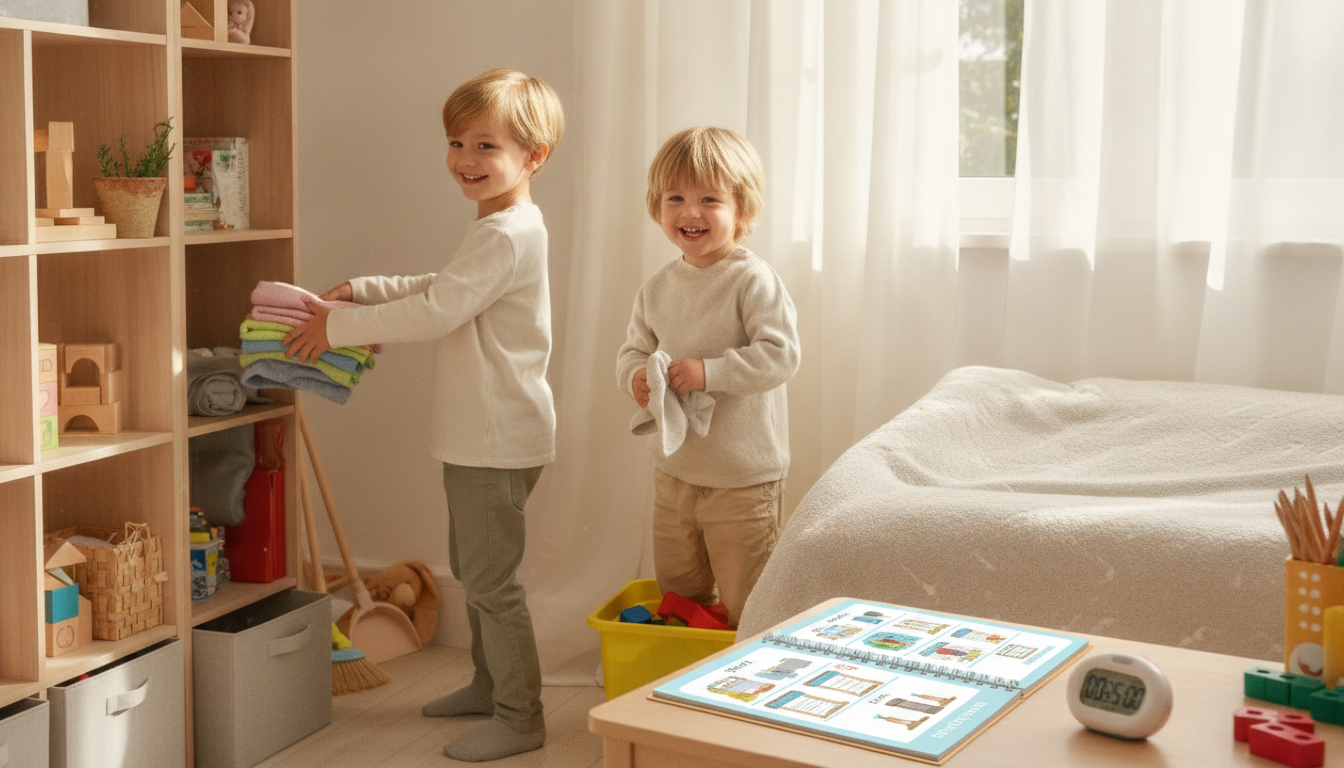
Smart Parent’s Bundle to Get Help with Cleaning: A 3-in-1 Guide to Fun, Easy Household Chores
Getting kids to help at home works best when expectations are clear, tasks are age-appropriate, and routines feel doable on busy days. This guide-style bundle is designed to turn everyday cleaning into simple systems—using short checklists, kid-friendly roles, and small rewards that build consistency without constant reminders.
What’s inside the Smart Parent’s Bundle (3-in-1)
If household chores feel like a daily negotiation, structure is the fastest way to reduce friction. The Smart Parent’s Bundle to Get Help with Cleaning: 3-in-1 Guide for Fun and Easy Household Chores is built to help families move from “nagging and redoing” to “repeatable routines kids can actually follow.”
- A step-by-step framework for turning chores into predictable routines kids can follow
- Ready-to-use chore ideas that reduce decision fatigue and repeatable scripts for getting started
- Tools for keeping the tone positive: quick wins, clear boundaries, and follow-through that doesn’t escalate
Instead of relying on motivation (which comes and goes), the bundle leans on routines, visible cues, and simple standards—approaches that pair well with how kids build skills over time. For child development basics and what’s typical by age, the CDC’s child development resources are a helpful reference: https://www.cdc.gov/ncbddd/childdevelopment/index.html.
Why kids resist chores (and what helps fast)
Resistance usually isn’t laziness—it’s often confusion, overwhelm, or a lack of clear ownership. Quick fixes work best when they’re concrete and repeatable.
- Unclear directions: swap “clean your room” for a 3-step micro-task sequence (pick up trash, put laundry in hamper, books on shelf).
- Overly long sessions: use short “reset” blocks (5–10 minutes) that end before frustration peaks.
- No ownership: assign a stable “home base” responsibility (pet bowls, entryway shoes, table wipe-down) instead of random tasks.
- Too much parental managing: replace repeated reminders with visible cues (checklists, timers, and a consistent start time).
Positive, consistent follow-through matters more than perfect delivery. For practical, kid-centered discipline guidance, the American Academy of Pediatrics is a reliable source: https://www.healthychildren.org/.
Make chores feel like a game without turning everything into a prize
“Fun” doesn’t have to mean constant rewards. The goal is energy and momentum—then the routine carries itself.
- Use countdown challenges: “Beat the timer” resets for one small zone (couch area, bathroom counter).
- Create role-play jobs: “Supply manager” (restocks wipes), “Inspector” (checks for missed crumbs), “DJ” (music for the sprint).
- Track progress visually: sticker or checkmark streaks that emphasize consistency over perfection.
- Keep rewards small and immediate when needed: choose-from-a-list privileges (pick dessert, choose family movie) instead of money for every task.
If you use rewards, keep them tied to behaviors you want repeated (starting on time, following the checklist, staying calm). That’s the core idea behind positive reinforcement: https://dictionary.apa.org/positive-reinforcement.
Age-appropriate chores that actually help (quick reference)
When chores match a child’s development, the “battle” often disappears. Start with tasks that have a clear finish line, teach the routine once, and keep the same order and tools so the habit forms faster.
- Match tasks to development: fine-motor tasks first (sorting socks) before complex multi-step cleaning.
- Teach once, then standardize: same order, same tools, same “done” definition.
- Plan for mistakes: build in a 30-second re-check instead of redoing everything silently.
| Age range | Easy starters | Next-level responsibilities | Parent support needed |
|---|---|---|---|
| 3–5 | Put toys in bin; wipe spills with a cloth | Match socks; carry small trash to bin | High: model each step, keep sessions under 5 minutes |
| 6–8 | Set table; make bed with simple bedding | Sort laundry by color; vacuum a small area | Medium: checklist + quick inspection |
| 9–12 | Load/unload dishwasher; tidy shared spaces | Clean bathroom sink; help with meal prep cleanup | Low-medium: clear standards, occasional coaching |
| 13+ | Laundry start-to-finish; trash/recycling schedule | Bathroom clean; basic floor care; rotate kitchen duties | Low: agreed expectations and accountability |
Set up a weekly rhythm that doesn’t collapse on busy days
The best chore plan is the one that survives Tuesdays. Build a baseline that’s small, automatic, and tied to a consistent trigger.
How to introduce chores without power struggles
Common sticking points and quick fixes
Using the bundle day-to-day
If you’re also trying to simplify other “life admin” routines, a second digital bundle can help reduce decision fatigue in a different area: Winter Survival Skincare Tips Bundle | winter skincare routine 3-in-1 Digital Guides.
FAQ
What’s a good starting chore routine for kids who refuse to help?
Start with a 5–10 minute daily reset at the same time each day, using one short checklist and a timer. Offer a controlled choice between two tasks, then follow through consistently by pausing the next activity until the checklist is complete.
Should kids get paid for chores?
Many families keep basic chores unpaid as shared responsibilities, and reserve paid “extra jobs” for optional tasks. If you do allowance, separating it from baseline participation often helps keep expectations clear and consistent.
How long should a kid’s chore time be each day?
A practical range is 5 minutes for young kids, 10–20 minutes for school-age kids, and 20–30 minutes for teens. Keeping the session predictable and time-limited prevents burnout and makes it easier to repeat daily.
















Leave a comment