Break the Tension: 2-Minute Calm for Stressful Days
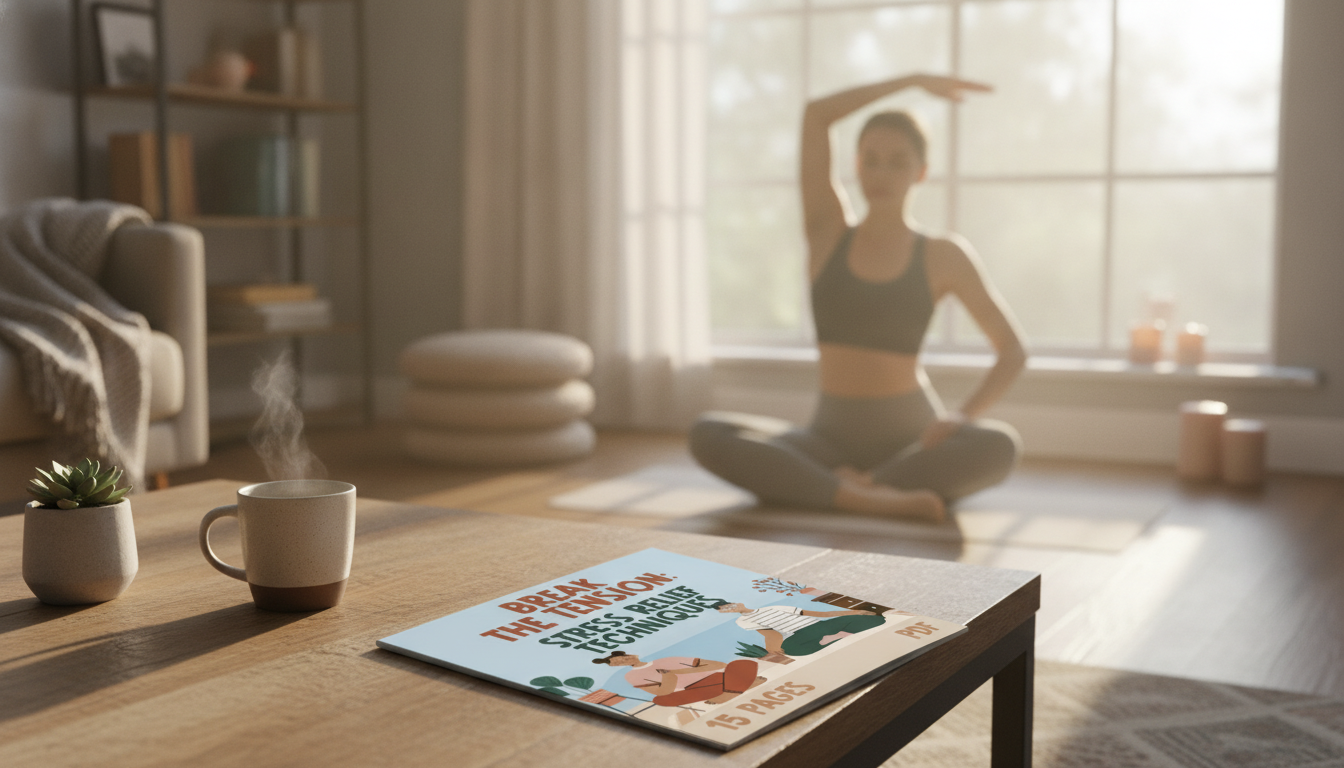
Break the Tension: Simple Ways to Calm Your Body and Clear Your Mind
Stress often shows up as tight shoulders, a racing mind, or that restless feeling that makes it hard to focus. The fastest relief usually comes from working with the body first—breath, senses, and small actions—then following up with practical choices that reduce the pressure building back up. The techniques below are designed to be used in real life: at work, at home, in the car (parked), or between tasks.
Spot the early signs of tension (before it spikes)
Catching stress early is like noticing a pot starting to simmer instead of waiting for it to boil over. Look for patterns in three places—body, thoughts, and behavior—so you can intervene sooner.
- Body signals: jaw clenching, shallow breathing, stomach tightness, headache pressure, elevated heart rate.
- Thought signals: looping worries, mental “tabs” left open, irritability, difficulty prioritizing.
- Behavior signals: rushing, procrastination, scrolling, snacking without hunger, snapping at small things.
- Quick reset rule: address physiology first (breath + posture), then attention (grounding), then plan (time boundaries).
If you’re unsure what your “early” looks like, check your jaw and shoulders a few times a day. Many people carry tension there long before they feel mentally overwhelmed.
Breathing exercises that work in under 2 minutes
Breathing is one of the fastest ways to nudge the nervous system toward calm. The goal isn’t to take huge breaths—it’s to make breathing smoother, lower, and more controlled.
Physiological sigh (30–60 seconds)
Inhale through the nose, then “top off” with a second short inhale, followed by a long exhale through the mouth. Repeat 3–6 cycles to downshift quickly.
Box breathing (1–2 minutes)
Inhale 4 counts, hold 4, exhale 4, hold 4. Keep shoulders relaxed and breathe low into the ribs.
Extended exhale (90 seconds)
Inhale 4 counts, exhale 6–8 counts. Aim for quiet, steady breaths rather than deeper breaths.
If dizziness occurs: reduce depth, slow the pace, breathe normally for a few cycles, and try again gently. Pair any breathwork with a simple jaw cue: drop the tongue from the roof of the mouth and unclench the jaw to signal safety to the body.
| Situation | Technique | How long | Best cue to start |
|---|---|---|---|
| Heart racing or sudden panic | Physiological sigh | 30–60 sec | Hands feel cold, chest tight |
| Pre-meeting nerves | Box breathing | 1–2 min | Talking fast, mind blanking |
| End-of-day wired feeling | Extended exhale | 1–3 min | Can’t “turn off” thoughts |
| Tension headache building | Extended exhale + jaw release | 2 min | Forehead/temple pressure |
For more background on why stress affects the body the way it does, the American Psychological Association’s stress overview is a helpful reference.
Quick meditations for busy days (no special setup)
These are “micro” practices—small enough to use between emails or before walking into your kitchen to deal with the next thing.
- One-minute labeling: silently name what’s happening—“thinking,” “planning,” “worrying,” “hearing”—then return to the next breath. This reduces emotional charge without trying to force thoughts away.
- 3-2-1 reset (about 2 minutes): notice 3 sounds, 2 body sensations, 1 thing you can do next. It creates a bridge from overwhelm to action.
- Micro-compassion (60–90 seconds): place a hand on the chest, breathe slowly, and repeat a neutral phrase such as “This is hard; take the next small step.”
- Walking pause (2 minutes): slow the pace, feel each footfall, and soften the gaze—ideal to prevent stress from “sticking” between tasks.
If you want a deeper dive into mindfulness and what research says about it, the National Center for Complementary and Integrative Health offers a clear, balanced overview.
Grounding techniques that calm the nervous system right now
Grounding works best when it’s specific and sensory. Instead of wrestling with thoughts, you anchor attention to what’s real and present.
For a practical guide to breath-based calming, the NHS breathing exercises for stress page provides simple, approachable options.
Time management tips that reduce stress at the source
A simple daily routine to keep tension from returning
A guided toolkit to practice these techniques
If following steps is easier than improvising in the moment, a structured guide can help turn these tools into repeatable routines. A practical option is Break the Tension: Stress Relief Techniques – Breathing Exercises, Quick Meditations, Grounding Techniques, and Time Management Tips to Reduce Stress, which organizes quick calming methods and time tactics into short sequences you can use when you’re already stressed.
- One Bag, Two Weeks, Zero Stress – How to Pack a Carry On for Two Weeks
- A Packing Mastery Bundle for Southeast Asia – Packing List for Southeast Asia
FAQ
What is the fastest way to calm down when stress spikes?
Try a 30–60 second physiological sigh or a 90-second extended exhale to quickly lower arousal. Then ground with feet on the floor or a 5-4-3-2-1 scan, and choose one small next action to regain a sense of control.
How many minutes a day are enough to notice a difference?
About 5–10 total minutes per day, split into 1–3 minute resets, is often enough to feel a shift. Tie it to reliable cues—before meetings, at lunch, and at bedtime—so it becomes automatic.
Can breathing exercises make anxiety feel worse?
Sometimes people feel dizzy or uncomfortable if they breathe too deeply or too fast. Make breaths gentler, slow the pace, return to normal breathing for a few cycles, and consider medical guidance if severe panic or symptoms persist.















Leave a comment