Write Like Nike: Voice Patterns That Move People
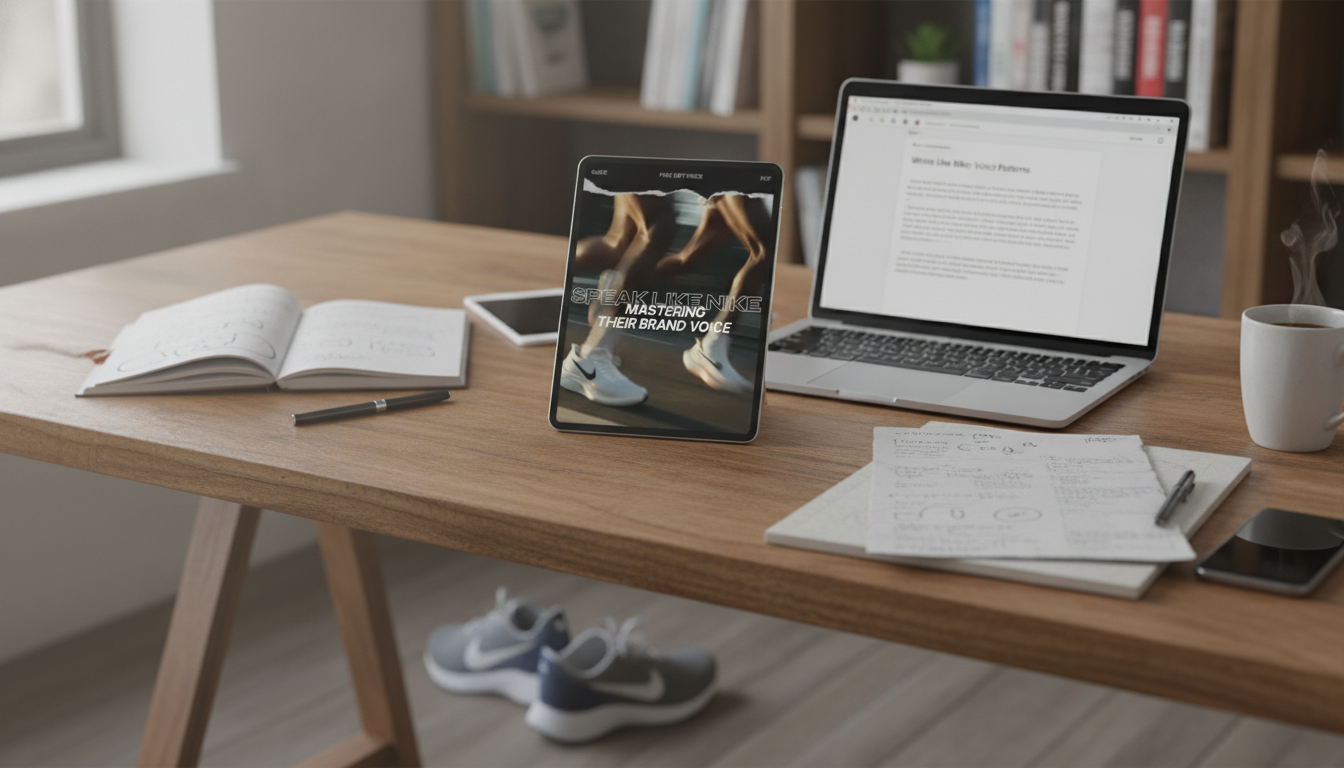
Speak Like Nike Without Sounding Like a Copy: The Voice Patterns That Move People
Nike’s voice feels inevitable: clean, confident, and built for motion. It doesn’t over-explain. It doesn’t ask for permission. It makes the customer feel like the main character—and then it gives them a next step. That’s why “Nike-like” writing shows up in everything from landing pages and paid ads to subject lines and button text. For more guidance, see Voice & Tone – University Marketing & Communications.
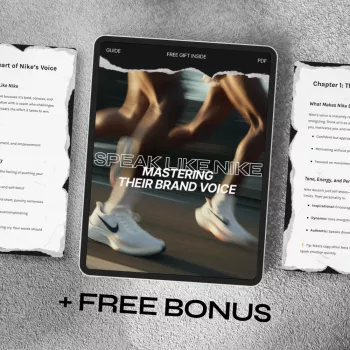
This guide-driven approach helps copywriters and marketers understand the mechanics behind that voice—then translate the patterns into original, brand-right copy. If you want a practical toolkit, Speak Like Nike: Mastering Their Brand Voice – Digital Guide for Copywriters & Marketers breaks the style into repeatable frameworks you can use across channels. For further reading, see Brand Voice Strategy: How to Build Brand Guidelines – Sprinklr.
What “Nike-like” brand voice actually sounds like
The style is often described as motivational, but the real driver is restraint. It’s motivational because it’s specific, not because it’s loud.
- Clarity over cleverness: simple words, minimal filler, no unnecessary qualifiers.
- Action-first cadence: verbs lead; sentences push forward rather than explain sideways.
- Confidence without arrogance: direct claims paired with human truth (effort, grit, progress).
- Athlete-centered perspective: the customer is the protagonist; the brand is the coach.
- Emotional economy: fewer words, higher impact—designed for quick comprehension.
In UX and marketing, that “economy” matters. The best brand voices remain consistent while adapting to context—something the Nielsen Norman Group highlights in its overview of tone of voice and usability: Tone of Voice in UX Writing.
Core principles the guide teaches you to replicate (ethically)
A Nike-inspired voice isn’t a list of catchphrases. It’s a system: a worldview, a rhythm, and a set of constraints that keep writing sharp.
Voice anchors you can audit in minutes
| Anchor | How it shows up in copy | Quick check |
|---|---|---|
| Direct | Short sentences; minimal hedging; strong verbs | Can the line be understood in 3 seconds? |
| Motivational | Encouraging push, not cheesy hype | Does it inspire action without exaggeration? |
| Athlete-first | Focus on the person’s journey and effort | Is the customer the hero of the sentence? |
| Bold | Decisive statements; confident rhythm | Would it still work if you remove half the adjectives? |
| Modern | Clean phrasing; contemporary references kept minimal | Does it avoid trends that age quickly? |
- Define a voice range: what must stay consistent (tone anchors) vs. what can flex by channel.
- Build a belief system statement: one paragraph that guides what you praise, challenge, and prioritize.
- Use a tight vocabulary set: preferred words + banned words to keep copy from drifting into fluff.
- Favor outcomes and identity: speak to who the customer becomes, not only what the product does.
- Turn features into challenges: convert specs into invitations to do more, go farther, or start now.
Brand storytelling works best when it stays consistent with the brand’s “truth,” not just its aesthetic. For a solid foundation on narrative and meaning, Harvard Business Review’s collection on storytelling is a useful reference: Brand Storytelling.
Breakdown of the copy mechanics: structure that creates momentum
Nike-like copy often feels fast because it’s engineered to move. Use structure to create that sense of momentum—even if your product has nothing to do with sports.
- Headline patterning: short imperative lines, contrast pairs, and identity statements.
- Microcopy discipline: buttons and labels that feel like a next step, not a formality.
- Rhythm and pacing: vary sentence length to create punch, then leave space to breathe.
- Concrete over abstract: specific images and actions beat vague motivation every time.
- Strategic repetition: repeat a key word or structure to build a chant-like effect.
If you study official Nike writing across launches and brand statements, you’ll notice how often the phrasing stays clean and human—even when the message is big. The Nike Newsroom is a helpful place to observe that consistency across formats.
Channel-by-channel applications (so the voice stays consistent)
Landing pages
Open with a promise. Reinforce with proof. Close with a challenge-based CTA that feels like a step forward, not a “submit” moment.
Paid ads
Social captions
Product descriptions
Exercises that turn brand voice into a repeatable workflow
What’s included in the digital guide
If you want a ready-to-use system instead of loose inspiration, Speak Like Nike: Mastering Their Brand Voice – Digital Guide for Copywriters & Marketers is built for real deliverables—headlines, CTAs, taglines, and campaign concepts you can execute quickly.
If your team also values “clarity under pressure” in other parts of work, the same action-first discipline shows up in concise digital guides like One Bag, Two Weeks, Zero Stress – How to Pack a Carry On for Two Weeks: fewer maybes, more decisions, and a tighter path from plan to execution.
Who this is best for (and when it’s not the right fit)
Quick checklist before publishing Nike-inspired copy
FAQ
Is it legal and safe to use a Nike-style brand voice?
Yes, it’s generally safe to learn from a style—tone, rhythm, structure, and clarity—so long as you don’t copy protected slogans, campaign lines, or branding that could confuse customers. The goal is to apply the principles in an original way that fits your brand.
How fast can a team apply this to real marketing assets?
Most teams can get quick wins in 1–2 working sessions by tightening headlines, CTAs, and email subject lines. A shared checklist and vocabulary set typically takes a few days to align on, then improves over time through edits and A/B testing.
Will this work for B2B brands or only sports and lifestyle companies?
It transfers well to B2B because clarity, action, and customer-as-hero work in any category. The key is pairing bold, direct language with accurate proof points and any compliance or regulatory requirements your industry demands.













Leave a comment